Skip to content
SONG KEY CHECKER · IN YOUR BROWSER

Free Online Key Finder

Drop in a song to detect its key, plus the Camelot code and BPM. It all runs on your device, with no upload.

or drop it here

MP3, WAV, M4A, OGG, FLAC or any format your browser can decode; up to the first 10 minutes · Maximum 100 MB
Checking a whole playlist? Use the BPM and key finder

Your file is processed in your browser and never uploaded

01

Choose or drop a song

Pick an audio file or drag it onto the box above.

02

Detect the key locally

The file is decoded and read locally, never uploaded.

03

Read and copy the key

See key, Camelot code, relative key and BPM, then copy.

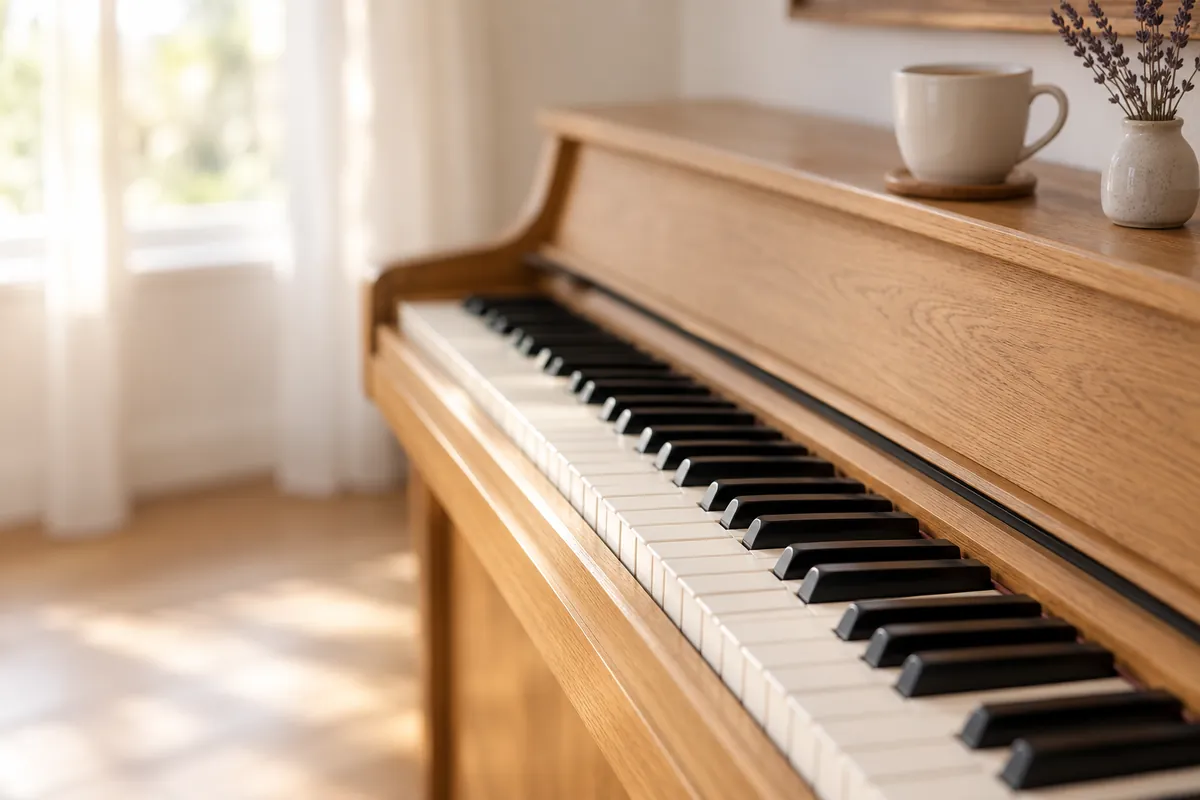
Close-up of wooden piano keys in soft window light, with a cup of tea resting on the lid
Every song has a home note
01 / KEY AND MODE

Find what key a song is in

A song key is the note the music keeps coming home to, plus whether it sounds major or minor. The key finder names both, such as A minor, with a confidence score.

  • Key and mode, such as A minor or E major
  • Relative major or minor shown alongside
  • Confidence plus the next two likely keys
02 / CAMELOT WHEEL

Mix in key with Camelot

Each key also gets a Camelot code, like 8A for A minor. Codes that match, sit one number apart or share a number with the other letter usually mix cleanly.

  • A Camelot code shown with every key
  • Mix 8A with 7A, 9A or 8B
  • Letter A means minor, B means major
A DJ choosing two records with matching color rings behind her
Mix in key, not by guesswork
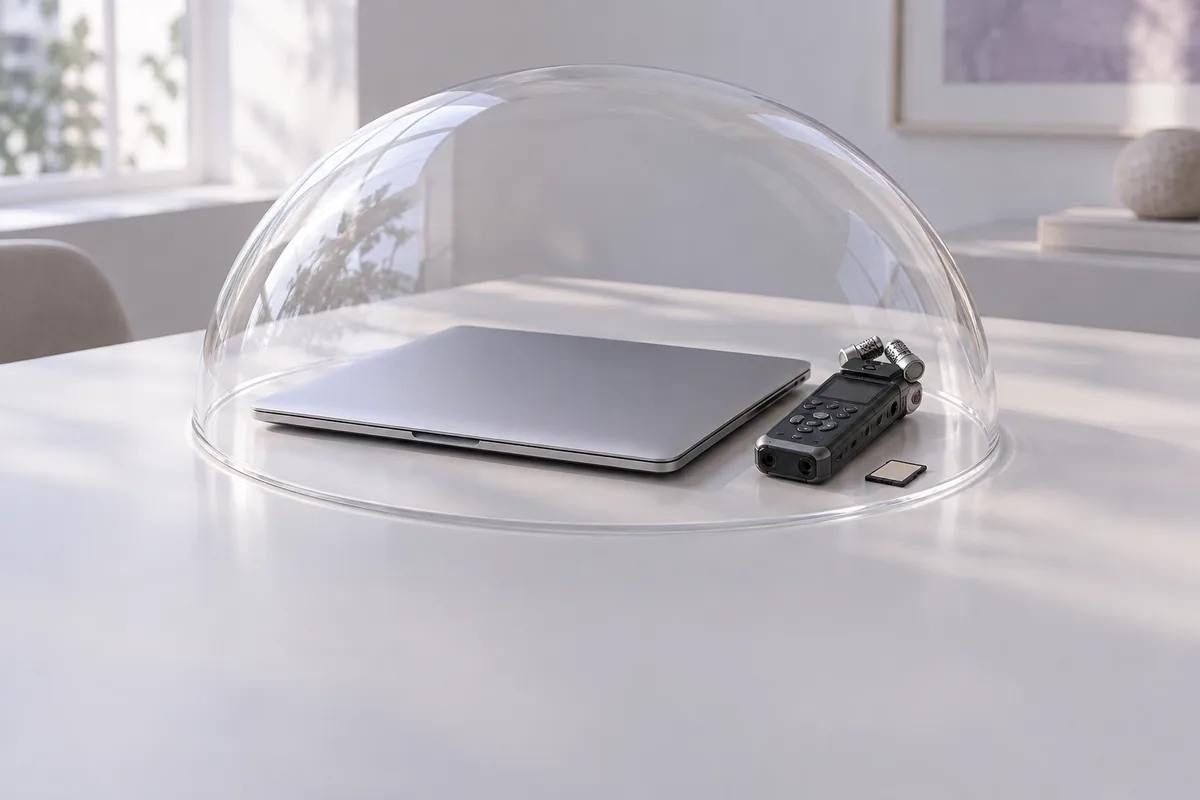
A closed laptop, audio recorder and memory card inside a translucent protective dome
Your music stays with you
03 / PRIVATE BY DESIGN

No upload, no sign-up

This audio key finder decodes and analyzes music inside your browser with signal processing, not AI. Your files never leave the device and there is no account to make.

  • Nothing is uploaded to a server
  • MP3, WAV, M4A, OGG and usually FLAC
  • Reads up to the first 10 minutes
USE CASES

Why find the key of a song

Knowing the key of a song saves guesswork when music has to fit with other music. Six common cases.

Harmonic DJ mixing

Check Camelot codes before a set so neighboring tracks share a key or sit one step apart, and long blends stay free of clashing notes.

Singing in your range

Find the original key, then move it up or down with the pitch changer until the chorus sits comfortably for practice or karaoke.

Learning songs by ear

Knowing the key narrows down the chords before you start. In G major, expect G, C, D and E minor to do most of the work.

Remixes and mashups

Pick acapellas and instrumentals that share a key, or note how far apart they are so you know how many semitones to shift.

Music for video edits

When two music cues meet in a video, matching or neighboring keys make the cut between them sound planned instead of jarring.

Teaching music theory

Play students a song, show the detected key and its relative major or minor, and talk through why the two share the same notes.

COMPARE

Key detector, your ear or DJ software?

All three can find the key. The difference is what you need on hand and how much of the work you do yourself.

CompareThis key finderBy ear or instrumentDesktop DJ software
What you needA browser and a file, no sign-upA trained ear or an instrumentAn installed app on a computer
Where audio goesAnalyzed on your device, never uploadedNowhere, you just listenStays in your local library
What you getKey, Camelot code, relative key, BPMYour best judgment of the home noteA key for each analyzed track
Skill neededNone, just read the resultPractice and some music theorySetup and some learning
Songs that change keyOne overall key per fileYou can follow each changeDepends on the program
Best forQuick checks before a set or practiceLearning songs and training your earAnalyzing a large DJ library
ACCURACY TIPS

6 tips to find the key more accurately

Most wrong readings come from the audio, not the math. Check these six things when a result looks off.

  1. 01

    Use the cleanest file

    A full-quality file beats a phone recording of speakers. Room noise and crowd sound blur the notes the analysis relies on.

  2. 02

    Skip drum-only parts

    Long drum intros, spoken parts and silence carry no harmony. If you can, trim them off and analyze the main body of the song.

  3. 03

    One song per file

    A DJ mix or medley holds several keys and gets one blended answer. Split it into single tracks; only the first 10 minutes are read.

  4. 04

    Check the relative key

    A minor and C major share the same notes. If the result feels wrong, listen for which chord sounds like home: the dark or the bright one.

  5. 05

    Read the runner-up keys

    When confidence is low, look at the next two keys. The answer is often one of them, commonly a key a fifth away or the relative key.

  6. 06

    Confirm by ear

    Hum or play the suggested home note over the track. If it sounds settled at the end of a phrase, the reading is probably right.

FAQ

Key finder FAQ

Answers about keys, Camelot codes and how this key finder works.

How do I find what key a song is in?+

Drop the song into the key finder above and it reports the key and mode, such as D major, with a Camelot code and a confidence score. Without a tool, find the note that feels like home at the end of phrases, then decide whether the music sounds major or minor.

How do I find the key of a song by ear?+

Hum the note the melody keeps returning to and find it on a piano or guitar; that is the tonic. Then play its major and minor chords over the tune and keep the one that fits. The last chord of a song is often, though not always, the home chord.

Is this an AI key finder?+

No. It is an automatic key detector built on signal processing, not AI. It measures how strongly each of the 12 notes is present across the track, compares that profile with all 24 major and minor keys, and ranks the closest matches.

What does a Camelot code like 8A mean?+

The Camelot wheel numbers the keys from 1 to 12 and adds A for minor or B for major, so 8A is A minor and 8B is C major. Codes with the same number are relative keys. DJs mix tracks with the same code, one number up or down, or the same number and the other letter.

Why does it say A minor when I hear C major?+

A minor and C major are relative keys built from the same seven notes, so the line between them is thin, which is why the relative key is shown next to the result. Decide by ear which chord feels like home; for DJ mixing, 8A and 8B blend either way.

Can it detect the key of a song that changes key?+

It gives one overall key per file, so a song that modulates shows the key that dominates it as a whole. To check a later section, cut it into its own file and analyze that. The next two likely keys can also hint at the second key.

Can I use it as a vocal key finder?+

Yes. You can analyze an a cappella or a recording of yourself singing. A single voice carries fewer notes than a full band, so treat the result as a starting point and check the runner-up keys. To fit a song to your range, shift it with the pitch changer.

Is this key checker free, and are my files uploaded?+

It is free with no sign-up. Files are decoded and analyzed in your browser and never uploaded. It reads what your browser can play, usually MP3, WAV, M4A, AAC, OGG and FLAC, in desktop or mobile browsers, and checks up to the first 10 minutes of a file.
FIND YOUR VOICE

Find the key of your next song

Drop an audio file into the tool above. It is free, needs no account and never leaves your device.

Try it with a file