Music students
Gauge your note naming before an aural skills class or exam, then retest every few weeks to see whether practice moves the number.
This free perfect pitch test plays 10 random piano notes from C3 to B5 with no reference note, and you name each one. Your score is compared with what pure guessing would get, so a lucky streak can’t pass for absolute pitch, and one-semitone near misses are counted separately. Choose white keys only or all 12 notes. It runs in your browser with no mic and no sign-up.
You will hear 10 piano notes picked at random between C3 and B5. Choose the name of each one; the octave does not count. No reference note plays first, so only absolute pitch can help you here.
Use headphones or turn your speakers up. On an iPhone, set the ring/silent switch to ring or the notes will not play.
Ten notes, one after another, and nothing to measure them against. Find a quiet spot and put on headphones if you have them.

White keys only asks for the seven plain note names, C to B. All 12 notes adds the five sharps and flats and is the stricter check. Press Play a test sound to set the volume; it plays one random note and never tells you which.
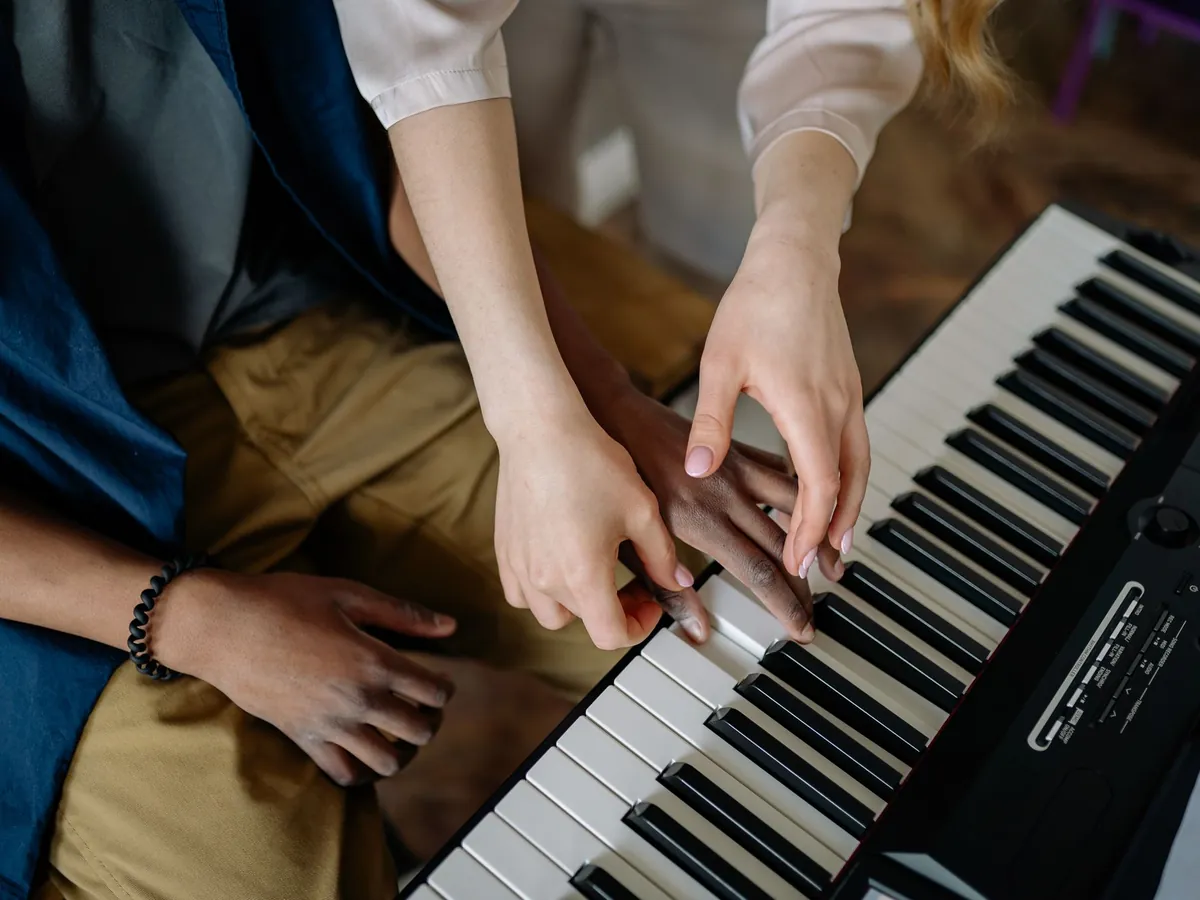
Press Start test and a piano note between C3 and B5 plays. Tap its name, or press the letter on your keyboard and hold Shift for a sharp. Only the letter counts, and the speaker button repeats the note as often as you need.

After the tenth note you get your score, the average a random guesser would get, your best streak and your near misses. A short verdict tells you how likely a score like yours is by luck, and a small chart shows how far off each answer was.
A score counts for more in the harder mode. Guessing averages 0.8 right out of 10 with all 12 notes and 1.4 with white keys only.
| Result | All 12 notes | White keys only | Chance by guessing | What it suggests |
|---|---|---|---|---|
| In the range of luck | 0–2 of 10 | 0–3 of 10 | 16% or more | The usual result, musicians included |
| A little better than luck | 3 of 10 | 4 of 10 | About 4% | Worth two or three retakes |
| Clearly better than luck | 4–7 of 10 | 5–7 of 10 | Under 1% | Good pitch memory or quick relative pitch |
| Strong sign of perfect pitch | 8–10 of 10 | 8–10 of 10 | Well under 0.01% | Likely absolute pitch if it repeats |
The chance column is the probability of scoring at least that many by guessing every note, the same sum the test works out for your verdict. Ten notes is a small sample, so trust two or three runs over a single one. Quick relative pitch can lift a score as well; the section on reading your score below explains how.
It is easy to fool yourself about naming notes, and easy for a quiz to flatter you. These four rules keep the score honest.
Every note in the shaded band can come up, black keys included in the all-12-notes mode.
The notes come from the middle of the keyboard, C3 to B5, where most melodies sit: 36 keys in all, tuned to the A4 = 440 Hz standard. Your browser builds each one on the spot with a quick attack and a slow fade, like a struck string, because people who name notes by ear usually find a familiar instrument easier than a bare electronic tone.
Octave numbers are shown small because they do not affect your score.
Every run starts cold: no tuning note, no scale, no count-in. Each note is drawn fresh from the whole range and never shares a letter with the note just before it, so "same as last time" is never the answer. Octaves are ignored on purpose. Whether it sounded low or high, a D is a D.
How often each score turns up by pure guessing
Right answers out of 10
Clicking at random still gets about one note in twelve right, so a raw score can flatter you. The result sets yours beside the guessing average for your mode and works out the exact odds of luck doing as well. The chart shows why eight or more is so telling: guessing almost never gets there.
The note was D♯, so D or E counts as a near miss.
An answer one semitone away, such as D or E when the note was D♯, is counted apart from a wild miss. People with partial absolute pitch, or with a note memory that has drifted a little sharp or flat, tend to bunch their errors right there. Your result shows how far off every answer was, so you can see that pattern for yourself.
A name for every note. Perfect pitch, also called absolute pitch, is the ability to identify a musical note, or sing one on request, without hearing any other note first. To someone who has it, a lone piano key simply sounds like B flat, in the same way a color looks blue without a second color beside it for comparison.
Rare in the general population. The figure quoted most often is about 1 in 10,000 people. It has never been measured precisely, and the rate is far higher in some groups: musicians who began lessons in early childhood, usually before about age six, and native speakers of tone languages such as Mandarin, Cantonese and Vietnamese, where the pitch of a syllable changes its meaning. A 2006 study led by psychologist Diana Deutsch found absolute pitch much more often among Mandarin-speaking conservatory students in Beijing than among students at a conservatory in the United States. It also tends to run in families.
It comes in degrees. Some people name any note on any instrument in an instant. Others are reliable only on the piano, only on white keys, or only after a moment's thought. Even strong possessors tend to make the same few slips: the right letter in the wrong octave, an answer one semitone off, and more trouble with black keys than white ones. That is why this test ignores octaves, counts semitone slips as near misses and offers a white-keys mode.
It is tied to a tuning. Absolute pitch is anchored to the tuning a person grew up with, today almost always A4 at 440 Hz. Music tuned noticeably lower, as some early-music ensembles do, can sound out of place to them, and some people with it notice their inner reference shifting as they age, so notes they once knew instantly start to feel slightly off.
Last updated November 6, 2026You only need the letter names. There is no sheet music involved. If C to B is new to you, start with White keys only, which leaves seven answers instead of twelve. Most people, including plenty of professional musicians, score close to chance here: one or two out of ten. That is the expected result and has nothing to do with musical talent.
Relative pitch can borrow points. After every answer the test shows you the correct note. A trained ear can then measure the next note from that one, hearing for example a jump of a fourth and counting up from the note it just learned. That is relative pitch, a valuable skill but a different one. For a stricter check of absolute pitch, choose All 12 notes and wait fifteen seconds or so before each answer, humming something unrelated, so the last note fades from memory.
What a real perfect pitch score looks like. People with absolute pitch tend to get the very first note right, answer quickly, and score high every time they take the test. If your score rises only after a few notes, or swings a lot from day to day, relative pitch or memory for a few familiar notes is probably doing more of the work.
Where to go next. The guide to perfect pitch vs relative pitch explains how the two skills differ and how to train the one most music relies on. If naming notes felt impossible, the tone deaf test checks your pitch hearing without any note names, and the voice tuner shows which note you are singing as you sing it. You can find every other check in the list of free voice tests.
Most people are simply curious. For anyone who works with music, a quick check of note naming is useful too.
Gauge your note naming before an aural skills class or exam, then retest every few weeks to see whether practice moves the number.
Find out whether you can pitch a starting note without a pitch pipe, and how often you land a semitone away from it.
Children who already know the note names can play the white-keys mode like a game. Early lessons are linked with absolute pitch, so a young pianist may surprise you.
Watched a clip of someone naming chords on the spot? Ten notes and a comparison with chance give you a real answer instead of a hunch.
Short answers about absolute pitch, how rare it is and how this test scores you.
Ten notes will tell you more than any article. It takes about a minute.
Look at two things: your score and whether it repeats. Eight or more out of ten in the all-12-notes mode, right from the first note, on two separate days, is a strong sign. One or two out of ten is what most people get, musicians included, and it is the same as guessing.
The usual estimate is about 1 in 10,000 people, though nobody has counted precisely. It is much more common among musicians who started lessons in early childhood and among native speakers of tone languages such as Mandarin or Cantonese.
Accurate enough to tell real note naming from luck, because it compares your score with the exact odds of guessing. Ten notes is still a small sample, and speakers, tiredness and relative pitch can all shift it, so take it two or three times before deciding.
Adults can get noticeably better at naming notes with steady practice, often by memorizing one anchor note and building out from it. The instant, effortless kind that people who grew up with it have is rarely reached in adulthood. Relative pitch, on the other hand, keeps improving at any age.
Yes, this one. You only need the seven note names, and the white-keys mode keeps the choices simple. No sheet music, instrument or microphone is involved.
Perfect pitch names a note on its own. Relative pitch names notes by their distance from a note you already know. The full comparison, with interval songs for practice, is in our guide to perfect pitch vs relative pitch.
Not by itself. It helps you find a starting note without an instrument, but singing in tune depends on hearing the music around you and steering your voice to it. Relative pitch and practice matter more, and the singing test shows how closely you can follow a melody.
Placing a note in the right octave is a separate skill, and octave mix-ups are common even among people with strong absolute pitch, especially with unfamiliar sounds. Scoring only the letter keeps the test on the question that matters: which note it was.
No microphone. It is a listening test, and nothing is recorded or uploaded. Headphones help, particularly with the low notes on small laptop speakers.
 Popular
Hear two notes and say which way the pitch moved. No note names needed.

How the two skills differ, and which one musicians lean on.
See the note, Hz and cents of your voice as you sing.

Sing a short melody back and see how close you stay.
It takes about a minute. Pick a mode, put on headphones and see how many of ten notes you can name cold.