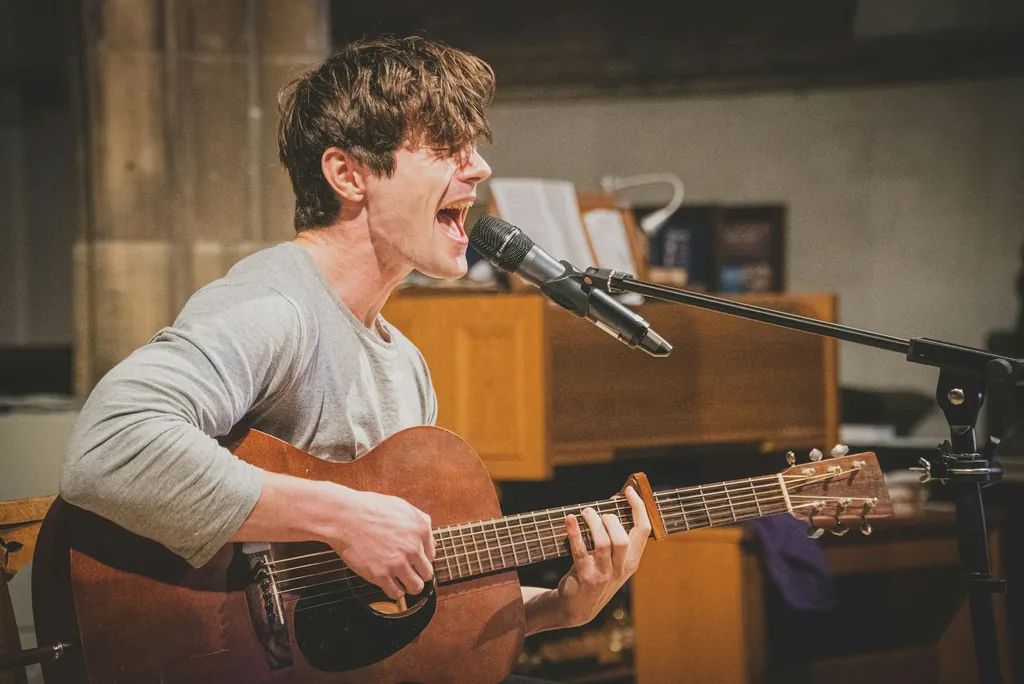
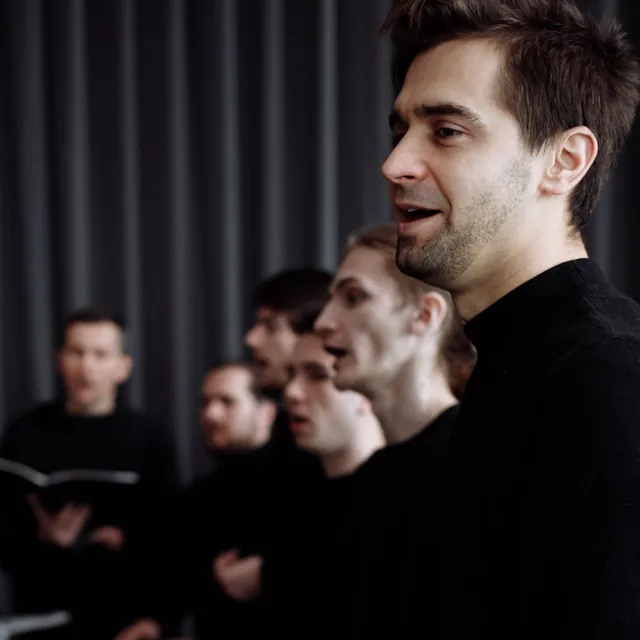
A countertenor is a man whose singing voice covers the alto range, about E3 to E5 (165 to 659 Hz), mostly in falsetto. Sing into the free mic test on this page to see your lowest and highest notes in note names and Hz and what percent of the countertenor range you cover, in about a minute. No sign-up, and nothing is recorded. Below: kinds of countertenor, their music and singers.
E3 to E5, 165 to 659 Hz
Free mic test, no sign-up
Nothing leaves your browser
Countertenor range testFree · no sign-up
How to sing it
01
Start on an easy low “ah” in your normal voice, around E3 to A3.
02
Climb slowly and let your voice flip into falsetto when it wants to, resting about 2 seconds on each note.
03
Press Stop when the next note would be a strain. Squeaks and cracks are left out.
Countertenor · E3–E5
E3E5
C2C3C4C5C6
Tap a key to hear its note
Your voice is analyzed inside this browser tab. Nothing is recorded, saved or sent anywhere.
Sing at an easy volume and stop if your throat feels tight or sore. A minute of humming first helps.
Quick reference
Countertenor vocal range in notes and hertz
Voice-type charts place the countertenor vocal range at E3 to E5, two octaves that line up with the contralto. The surprise is the register: most of those notes come from falsetto, well above the pitch the same man speaks at.
Landmark
Notes
Frequency
What to know
Classical countertenor range
E3 – E5
165 – 659 Hz
The figure most voice-type charts use
Comfortable middle (tessitura)
About C4 – D5
262 – 587 Hz
Where Bach and Handel alto parts mostly sit
Chest-to-falsetto switch
Usually B3 – D4
247 – 294 Hz
Where the voice flips; training makes the join smoother
Upper extension
F5 – G5
698 – 784 Hz
Reached by lighter, higher countertenors
Choir male alto part
About G3 – D5
196 – 587 Hz
The alto line in church and early music choirs
Sopranist (male soprano)
Up to about C6
Up to 1,047 Hz
Uncommon; sings parts written for soprano castrati
Notes use scientific pitch notation (C4 = middle C, A4 = 440 Hz). Some books print G3 to E5 or G3 to F5 instead, describing only the falsetto part of the voice. We use E3 to E5 everywhere here so your result lines up with the other six voice types. All of these are typical spans, not hard limits.
How it works
Run the test with your falsetto Falsetto included
Most men test their range in chest voice only and stop somewhere around G4. For a countertenor reading, the high register has to be part of the run, so give it a proper warm-up first.
01
Start with light sirens
Do a few gentle sirens on “oo” or “ng” that flip from your normal voice into falsetto and back. Keep going for a minute or two, until the flip feels smooth and the high notes stop sounding airy.
02
Let the voice tip over
Press Start on any easy low note. As you climb, don’t fight the moment your voice wants to lighten; let it tip over into falsetto and carry on upward. Guided mode works well too: find your top falsetto note first, then the bottom of your chest voice.
03
Check two numbers
Look at your countertenor match and at your highest counted note. A top near D5 or E5 puts you in countertenor territory. If the result stops around G4, your falsetto probably wasn’t counted, so run it again with more of it.
Countertenor types
Kinds of countertenor: male alto, sopranist and haute-contre
The word is used for several kinds of high male singing. They differ in which register carries the voice and in the music each one belongs to.
Type
Technique
Usual span
Repertoire
Countertenor (male alto)
Mainly falsetto, with chest voice at the very bottom
About E3 – E5
Alto arias in Bach’s Passions, Handel’s heroes, Britten’s Oberon
Sopranist (male soprano)
Light falsetto pitched a fourth or more higher
About C4 – C6
Parts once sung by soprano castrati, plus some modern works
Haute-contre
A very high tenor sung mainly in full voice
About C3 – D5
French Baroque opera by Lully and Rameau, including Platée
Choral male alto
Falsetto shaped to match the section
About G3 – D5
The alto line in English church choirs, next to boy and girl trebles
Pop falsetto
Falsetto for hooks and ad-libs, always amplified
Varies
Soul, disco and R&B; the same register without classical training
Handel’s castrato heroes, Rinaldo and Bertarido in Rodelinda among them, are usually cast with countertenors today. Living composers also create roles for the voice, from Edgar in Reimann’s Lear to Trinculo in Thomas Adès’s The Tempest.
The sound
How a countertenor differs from a tenor or an alto
Hearing a countertenor for the first time often surprises people: the pitch says alto, but the speaking voice and the build of the sound say man. Three things explain the difference.
Falsetto is the main voice
Most men use falsetto for the odd high note or a joke. A countertenor makes it his everyday singing voice, strong enough to carry an aria over an orchestra, and drops into chest voice only for the bottom few notes. A tenor works the other way round, singing almost everything in full voice.
Not the same color as an alto
Put a countertenor and a contralto on the same note and you can still tell them apart. The countertenor sound usually has less low resonance and a narrower, ringing core, a bit like a boy treble grown up. Hear one Handel aria sung by each and the difference is easy to catch.
Speaks low, sings high
A countertenor’s speaking voice is usually a baritone or tenor, somewhere around 85 to 180 Hz. His singing sits an octave or more above that, so the test may surprise you: a man who talks low can still cover most of E3 to E5 once his falsetto is warm.
On the keyboard
The countertenor vocal range, key by key
Shaded keys mark the countertenor range from E3 to E5. The bars show the stretch usually sung in falsetto and, far below it, where most men speak. The lighter keys at the top are notes some lighter voices add.
ReferenceCountertenor landmarks
Countertenor range E3–E5
Mostly falsetto C4–E5
Speaking voice
Falsetto flip ~C4
C2C3C4C5C6
Most men speak between about F2 and D#3 (85 to 155 Hz), an octave or more under the notes a countertenor sings.
Compare
Countertenor vs alto vs tenor
On paper the countertenor range matches the alto and sits a major third above the tenor. Tenors sing their span in full voice and peak around C5, while countertenors spend most of their time higher up, in falsetto. Every voice type is laid out on the vocal range chart.
Mezzo-sopranoFemale
A3–A5
AltoFemale
F3–F5
CountertenorMale
E3–E5
TenorMale
C3–C5
BaritoneMale
A2–A4
C2C3C4C5C6
If your falsetto holds notes up to D5 or E5 while your chest voice reaches down to about E3, countertenor is worth exploring. If your top stays in full voice somewhere between A4 and C5, start with the tenor page.
Neighbors
The voices next to the countertenor
The countertenor sits between two worlds: the alto range of women’s voices and the tenor range of men’s. Each card shows the reference range on a mini keyboard.
Sing through your range with plenty of falsetto and compare the scores.
Background
What is a countertenor?
In one sentence. Think of a countertenor as a man singing the alto part: the notes are the ones a contralto would sing, but they come from a male voice using its falsetto. Classical music uses the word for a trained voice type with its own repertoire, so a pop singer with a strong falsetto isn’t usually called one.
An old name. In 15th-century polyphony the line sung against the tenor was the contratenor, and its high form, the contratenor altus, gave us both countertenor and alto. For around two centuries Italian opera gave its high male heroes to castrati, while men singing alto in falsetto carried on in English cathedral choirs.
Back on the stage. The English singer Alfred Deller brought the voice to concert audiences after the Second World War, and Britten created the fairy king Oberon for him in his 1960 opera of Shakespeare’s A Midsummer Night’s Dream. Later singers such as Franco Fagioli, Andreas Scholl, Bejun Mehta, James Bowman and Anthony Roth Costanzo helped make Baroque opera with countertenor leads a normal sight, and Philip Glass’s Akhnaten put one in a title role.
Where to start listening. Handel’s “Ombra mai fù” from Serse, the alto arias of Bach’s St Matthew Passion, Purcell’s songs and Vivaldi’s Stabat Mater have all been recorded by many countertenors. Compare two or three versions of the same piece and you’ll hear how much the voice can vary, from airy and pure to rich and dark.
Practice
Training tips for countertenors
Quiet first, loud later. Early on, aim for a falsetto that is easy and in tune rather than big. Sing simple tunes at a gentle volume every day; strength comes from regular, relaxed use.
Practice the flip on purpose. Sing a five-note pattern that starts in chest voice and ends in falsetto, then move it up a semitone at a time through the area where your voice changes, often between B3 and E4. Listen for an even volume on both sides of the flip. The head voice vs falsetto page covers the two registers.
Spend time where the music lives. Most countertenor repertoire sits between about C4 and D5, so practice songs and slow scales there rather than chasing your top note. If the sound starts to pinch, take a breath and lighten up instead of pushing.
Learn the style. Baroque music asks for clean runs, clear words and tasteful ornaments. Listening to several recordings of the same aria teaches you more about style than any exercise can.
Get outside ears. Record yourself often and book a few lessons if you can; falsetto can feel fine while sounding strained, and a listener catches that quickly. Every few weeks, check your progress with the vocal range test or the highest note test, and rest if your throat feels sore. If hoarseness lasts more than a couple of weeks, see a doctor.
Last updated November 6, 2026
Where to sing
Where you hear countertenors today
Countertenor work is specialized, but there is more of it than most people expect.
Church and college choirs
Many cathedral, college and parish choirs in Britain keep places for male altos, and choral scholarships often go to students who can sing the part.
Baroque concerts and opera
Festivals and period-instrument groups program Purcell odes, Bach cantatas and Handel operas every season, and each one needs an alto soloist.
Contemporary opera
Modern composers often cast a countertenor to make a character sound magical, royal or unsettling, so premieres and new productions regularly need one.
Crossover and pop
Some countertenors record crossover albums or guest with pop artists, and the training carries over to any style that uses falsetto. The voice tuner helps keep that high register in tune.
FAQ
Countertenor vocal range FAQ
Common questions about countertenors, falsetto and the test on this page, answered briefly.
Still curious?
A minute of falsetto tells you more than any chart. Try the test at the top of the page.
What is a countertenor?
A countertenor is a man who sings classical music in the alto or mezzo-soprano range, using falsetto or head voice for most of it. You hear countertenors most in Baroque music, church choirs and modern opera.
What is the countertenor vocal range?
Expect to see E3 to E5 (about 165 to 659 Hz) in most charts. The bottom few notes of that span usually come from chest voice, the rest from falsetto. Books that print G3 to E5 or G3 to F5 describe just the falsetto part, and a rare sopranist can reach C6.
Is countertenor singing just falsetto?
Largely, yes. Teachers have argued for decades about whether to call the register falsetto or head voice, and the answer partly depends on how each singer produces it. What matters more is that a trained countertenor sound is steady and carries without a microphone. For the terms, see head voice vs falsetto.
Can any man learn to sing countertenor?
Plenty of men enjoy singing alto lines in falsetto, especially in amateur choirs, and the skill improves quickly with regular practice. A solo career is a different goal that needs a naturally attractive high register and years of specialist teaching.
What is the difference between a countertenor and a tenor?
A tenor’s range, about C3 to C5, is sung in full voice, the same register he speaks in. A countertenor’s range sits a third higher and is sung mostly in falsetto. Tenors carry the high melodies of opera and pop; countertenors cover alto parts and roles once written for castrati.
Am I a countertenor?
You might be if your falsetto feels comfortable and steady up to D5 or E5, sounds clear rather than airy, and you enjoy singing alto lines. Take the test above with plenty of falsetto in it, then ask a voice teacher to listen.
How does the countertenor vocal range test work?
The test follows your pitch through the microphone about 40 times a second and counts a note once it stays steady for roughly two seconds, whether you sing it in chest voice or falsetto. It then measures how much of E3 to E5 your lowest and highest counted notes cover, and does the same for the other six voice types.
Does the test save my voice?
No. The audio is analyzed in your browser as you sing and discarded straight away. Nothing is saved or sent to a server, and you don’t need an account.
Run one climb that includes your falsetto. You’ll get a countertenor match score, your steady low and high notes and your closest voice type, all free and inside your browser.